


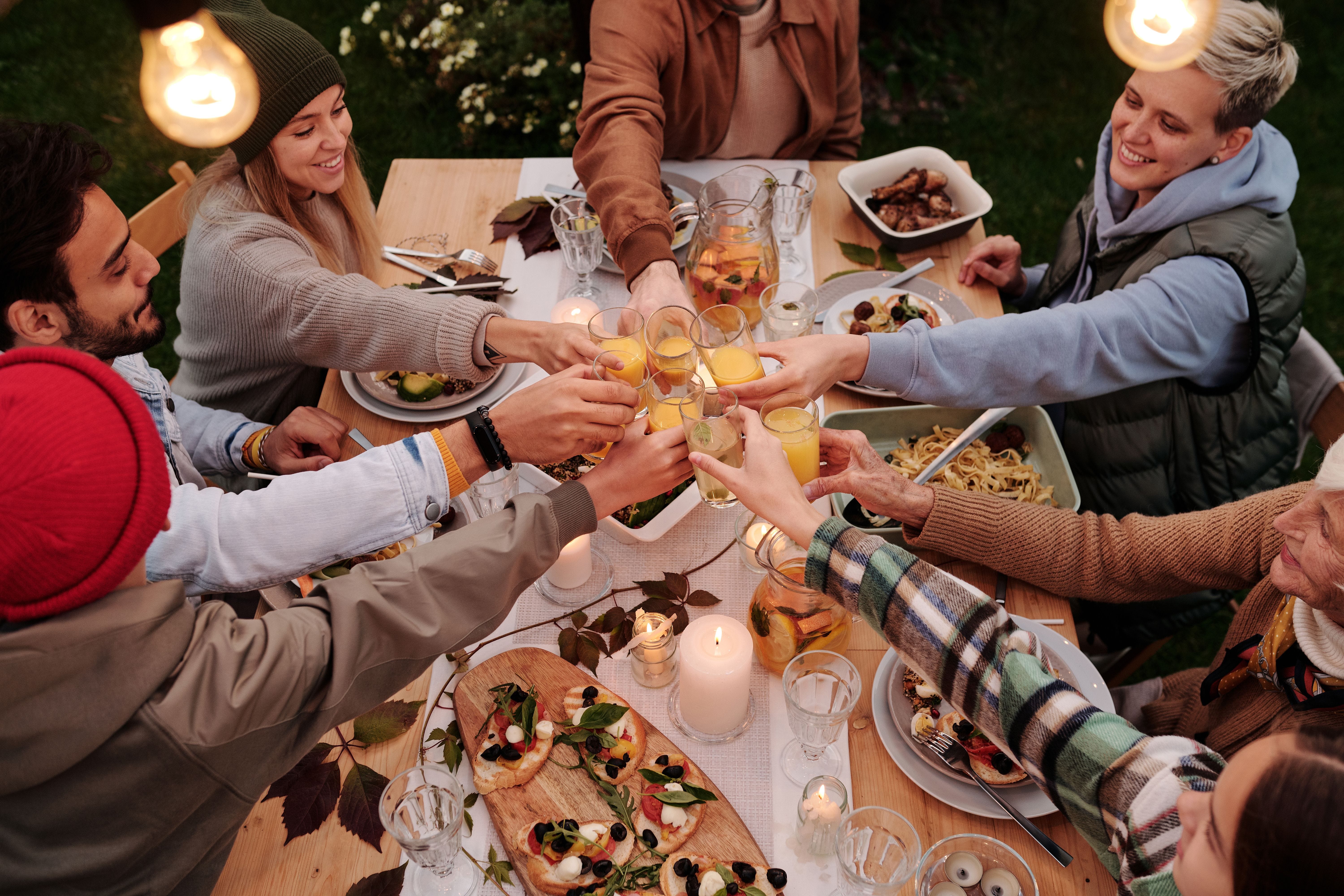
At about four months into our life in Valencia, Spain, I can say that I’ve collected lots of WhatsApp contacts and have a couple handfuls of acquaintances with friendship potential. But I can’t say I have made real friends here yet. The kind you text back and forth with, no greeting needed, or who you can grab a last minute walk or drinks with on a random Tuesday. Not that I did that enough in Seattle, but still - knowing I had the option somehow made a difference.
The other times I’ve lived internationally, I was in my 20s and 30s, and it felt like a different lifetime.
I keep naturally thinking back to the time I spent in Spain in 1998 that kicked off my Spanish language journey and my love affair with travel. That six months felt like years in comparison to how time flies now. By four months in, I was already saying tearful goodbyes to new friends that I shared core memories and felt deep connections with. They weren’t all long-term friends, but they were people I became close with at the time and spent hours talking and dreaming and exploring with. And some of them would in fact remain friends decades later.
We would make plans to meet across Europe such as “see you at 4pm on Tuesday at the Barcelona train station?” - with no cell phones or internet access to make it easy. I burned through phone cards making awkward calls to my friends’ family homes, hoping whoever picked up would speak some English. The challenges were great but we figured it out, and perhaps that made it all the more rewarding.
Back to 2026 - it’s been a whirlwind four months getting settled in Valencia: making our apartment feel like home, navigating bureaucracy, getting kids adjusted to a very different school experience and supporting their emotional ups and downs. Not to mention starting every routine all over in a new country and language, from grocery shopping to doctors appointments and everything in between.
Now we’re past the honeymoon phase; Valencia still charms me every day, but it no longer feels like a vacation, and I am ready to find friends and truly build our community here. I am dreaming of drawn-out sobremesas, and realizing that we need more friends to enjoy them with. We have all the ease of communication and resources that didn’t exist back in 1998, yet somehow making friends now feels so much harder.
My husband and I have gone on some ‘friend dates’ during the day while our kids are at school. They are fun if at times slightly awkward lunches that begin by trying to summarize our recent life histories into elevator pitches. We move on to commiserate about the challenges of bureaucracy and kids adapting to new schools and languages, and share recommendations for the best Indian and Thai restaurants we have found, for when we need a break from Spanish cuisine.
On one such recent date, we were prompted to share our “why” for moving to Spain, and I felt myself immediately squirm - was this an interview? Should I have prepared bullet points?
On another, the lunch ended with the “so how long are you here for?” question - and we chuckled knowing that this was a critical piece of due diligence in the friendship investment process. This couple had been recently burned by going all-in on a family friendship, only for the other family to decide to leave after a year. I get it - and I respect their caution!
Building community and developing friendships is not only desirable, but necessary. Deep relationships make us happier and healthier. It also means we have people to count on when we need it. It’s a strange and disconcerting feeling when I’m asked to list someone as my children’s emergency contact, and I draw a blank. Or I think “we should leave a spare key with someone” - but I’m not sure who.
Of course its different in your 40s, with three kids, in a new country. But why, exactly? There are obvious reasons for why making friends as an adult (period) is harder, and they were just as true in Seattle. People our age spend a lot more time with our immediate families. Life with kids and caring for others, plus working across time zones doesn’t allow the most flexibility for spontaneous hang outs.
Our time feels ever more valuable and scarce, and who we spend it with and the true connection we have with them is so much more important. At the same time, as middle aged caregivers we have far less of it. As it turns out, time itself is one of the proven critical ingredients in developing friendships. Sure, you need to “vibe” with someone to want to keep spending time with them, but then, according to research, it’s simply about logging hours of unstructured or social time in order to strengthen and deepen the relationship.
As an immigrant, or to some degree any kind of “newcomer” to a new place, there’s a clear difference between what is called “bonding” and “bridging” social capital. Bonding social capital is what often happens first, when you connect with other fellow immigrants that have language, demographic, or cultural commonalities. So for us, other Americans or recent immigrants. This is super helpful to navigating new systems and environments, and is easy and comfortable. Formal and informal immigrant groups abound, and so this type of connection is usually much easier to form.
But in order to truly integrate into a new place, you also need to build relationships with longtime residents; those who are native to the language, and who have deeper social and cultural ties. This is Bridging social capital. Alex and I both have a strong desire to make local friendships rather than simply falling into an “expat” crowd because it’s faster and easier. But that means more patience, because creating deep connections with people who have lived in a place much of their lives, who have strong social networks and family around already, takes a lot of time and effort.
We’ve met some people at our gym and are getting to know some families from our kids’ school, but those interactions are limited. And in both contexts, it’s been notably easier to get to know the other English-speaking foreigners than the locals. We’ve met some lovely people, some of whom we’ll continue to get to know and spend time with. But they are understandably the ones who are in the same boat - new in town, open and ready to meet new people as opposed to content and busy with existing deep relationships.
I think in some ways, it becomes too easy to avoid discomfort as we age and have our own nuclear family. I technically have more free time than I did before we moved: my kids’ school day is longer (actually aligned with adult jobs 🤯), and I am now ‘only’ indirectly involved in caregiving responsibility for my brother and mom, from a distance. My kids are going through the discomfort of being in a new school where almost everyone else speaks a different native language. Maybe I, too, need to force a little more discomfort into my life everyday. Perhaps throwing myself into a new art or dance class is just the nudge I need.
What I love is that we do have several existing close, longtime friends that are living nearby in other parts of Spain and France, and we’ve already gotten to see them all at least once since we arrived. It’s comforting to know that even if they aren’t in the same city, we at least have close ties on this side of the Atlantic. I recently had a dear friend visit from the US and it filled my soul, and fortunately, we have more visits to look forward to.
I know we’ll find our community here, with continued persistence and patience. Having community is essential to our health as caregivers. It is the essential scaffolding and safety net for those of us holding the wellbeing of others in place on a daily basis. We carry a heavy load, and even if it’s often joyful, we need someone there to support us, too.

How have you recently had to build community from scratch? Have you successfully made close friends or built a “village” as an adult or a transplant to a new place? Share your stories (and tips) in the comments!
I've never moved internationally with kids, but I am an American who's lived in Germany for 14 years now (my kids were born here) and really my only tip for living abroad is to learn and speak the language as well as you possibly can. I have a group of English-speaking expat friends, and while it's nice to get together with them once in a while, most of my day-to-day contacts are in German. In my opinion, it's the only way to really belong in a foreign country. The cool thing is that, once you've reached a basic conversational level in a foreign language, the main thing you need to do to get better is: talk to people! So you're building friendships and improving your language skills all at the same time. It is indeed uncomfortable at first, but so necessary. Find other foreigners who also want to practice their Spanish so you don't fall into the trap of speaking English as a lingua franca. Good luck!
Anna, thinking of you all with love as I read this. I have no doubt that in time you will all settle into community in a very solid way. The seeds of friendship are there and will be cultivated beautifully. Families there will be delighted and enriched by friendship with the DLCs! ♥️♥️♥️♥️. Adelante, amigos!