


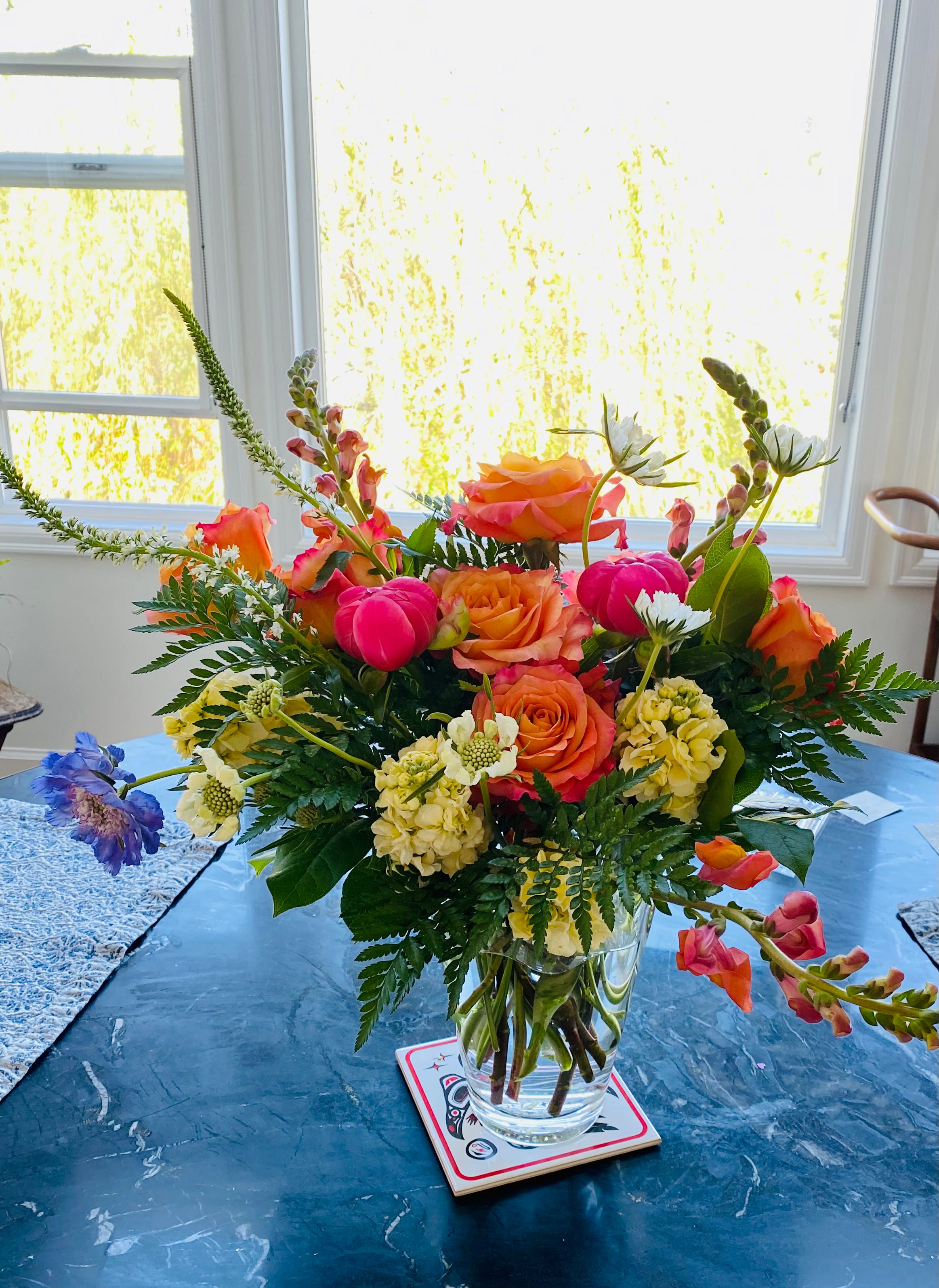
I never really understood why anyone would want flowers when they are grieving - until my dad died. I always imagined that those bouquets would just serve as depressing reminders of a pain so great that no object of beauty could fix.
I received many bouquets in the week or so after I returned home from Mexico, where I unexpectedly said a final goodbye to my dear father. Surprisingly, those flowers ended up really comforting me, and I appreciated their presence and beauty more than I could have imagined.
I’ve since realized that it wasn’t the flowers themselves. It was the community of people who love me that they represented, a reminder that others were there for me, to help hold my feelings. They were not so much a reminder (I was not exactly about to forget, anyway) as an important acknowledgement of my profound loss.
Maybe the symbolism seems obvious, but it wasn’t to me until that moment of grief. The flowers themselves represented the care of other humans, and the interconnectedness and dependence we share as living things in this world.
Their presence along with cards and text messages and care packages reminded me that even during the darkest times, I have many people caring for me and available to lean on. And it felt particularly important to be reminded of that in the post COVID world, as we had become so easily accustomed to less human contact.

Community and emotional support is incredibly important to humans, particularly in times of crisis. Yet it seemingly has become harder and harder to come by and maintain in a digitized world, where a simple unplanned phone call or house visit - once normal for us Xennials - has somehow become perceived as almost intrusive.
Many of us in the US are experiencing grief for the violence in our communities, mostly carried out by our own government against the people it is meant to represent. The fascists in charge are doing everything in their power to tear communities apart and pit people against each other.
But you know what? The disruption and pain is driving some of the greatest community building and protection efforts we’ve seen in this country in a long time. People in Minneapolis and other communities - whether directly targeted or acting in solidarity - are gathering in the streets again, looking out for their neighbors, and opening up their small businesses as safe spaces for those resisting ICE to make signs, warm up and refuel.
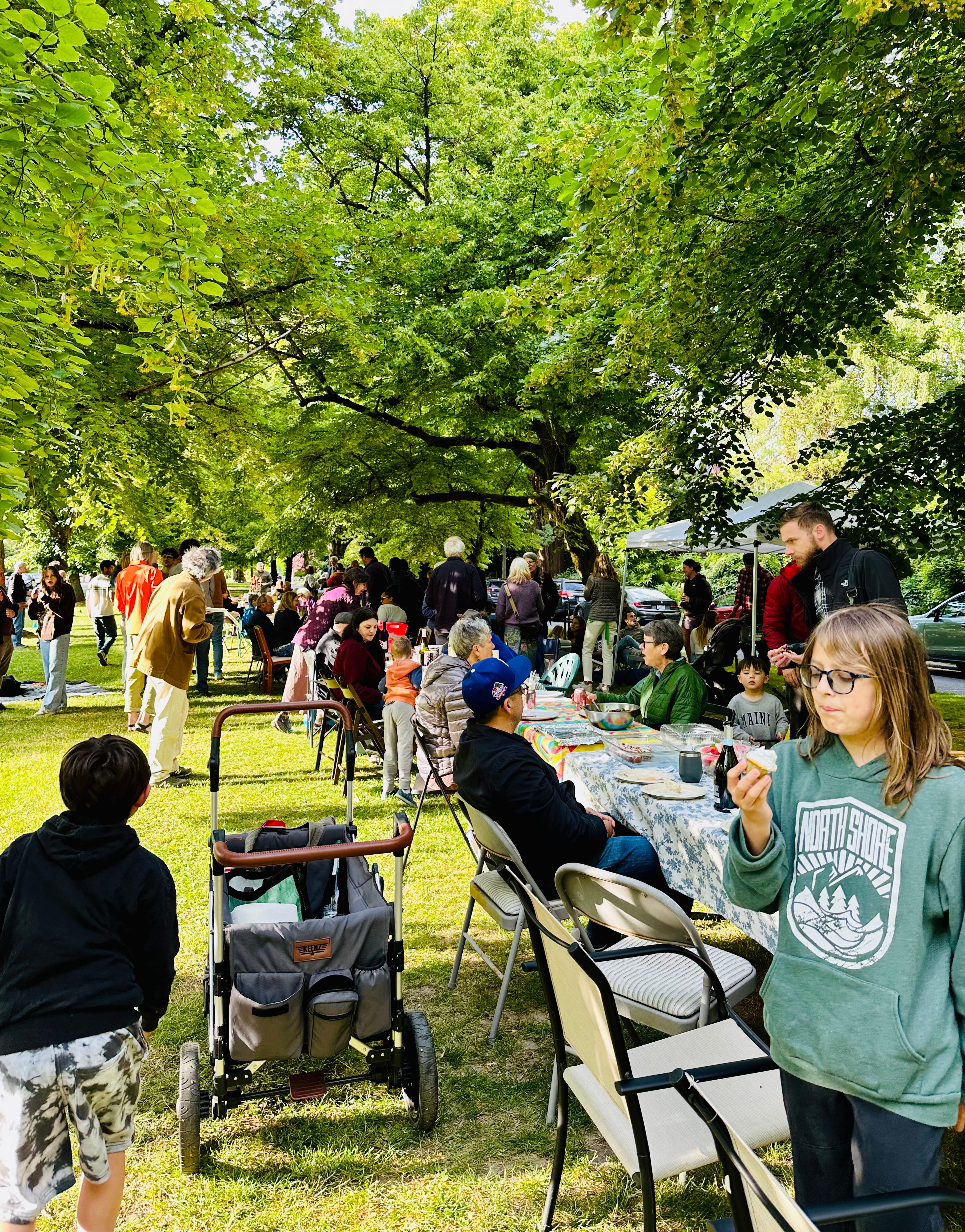
Even beyond the direct community efforts responding to imminent violence, there is a growing movement to build and deepen community ties that have atrophied in recent years. From deep casual hosting and the many recent potluck enthusiasts to Whatsapp groups to organize walking kids to school, and the proliferation of tin can phones for kids. I have loved reading about the children in several of our local school districts in Seattle that have staged walk outs to protest ICE over the past couple of weeks. These are our future leaders, getting off of the devices that mostly consume their time, and into the streets to look out for each other, together.
At first the idea of hosting your neighbors for coffee or a potluck feels inadequate and possibly even minimizing given the moment we are in, particularly for those in places under siege. But suggesting simple community building efforts is by no means meant to minimize the pain - quite the opposite. Building community is not only important to our own well being, but deeply important for organizing in times of resistance. Garrett Bucks of the White Pages wrote an excellent piece explaining seven reasons why this is true. I recommend reading the whole article, but essentially the idea is that you can’t build an effective movement with people you don’t know and if you don’t care about your neighbors; and consequently, fascism thrives on loneliness, division and fear. He writes:
Rage gets us one step down the road. Heartbreak another. But we’ll burn out if that’s all that sustains us. If we want to keep moving forward, we have to feed each other. With our love. With our laughter. With shoulders to cry on. With stories that were once our own but have long since become shared lore. With casserole dishes filled to the brim. With care for all of our children, all of our elders, all of the loneliest friends in our midst. With memories, now distant, of the days when we didn’t know each other, and how much worse it felt. With relationships, once frayed, now repaired. With mistakes made, and grace both given and received. With a promise, first whispered tentatively, then shouted with full throat. The best is yet to come. There’s a beautiful destination ahead of us. We just can't get there alone.
The ability to truly care for others begins with connection.
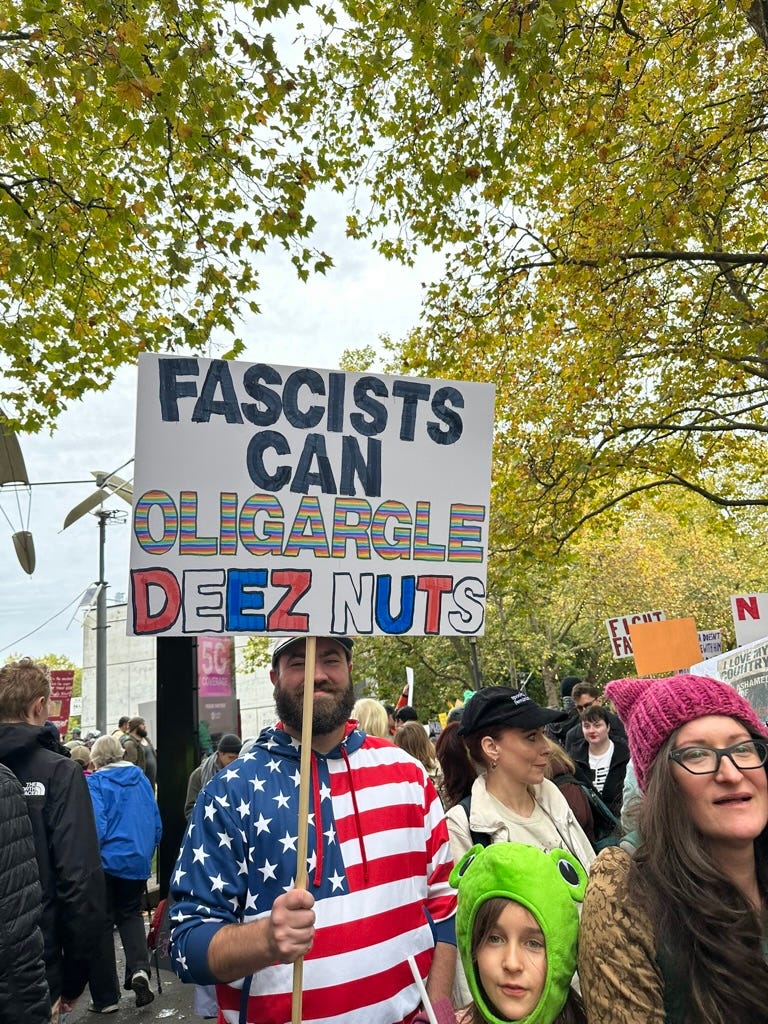
The creative, funny and at times even joyful displays of solidarity and protest that emerge from these connections are what keep my faith in humanity from crumbling. Joy and togetherness are critical to resistance in these dark times. They are the bouquets of flowers reminding us of all the care that remains amidst the grief.
Tell me what you’re doing to build community and care to get through these dark times.
I really needed this today. Thank you.
Inspiring and beautiful as always! Can’t wait to potluck with you all and scheme for a better world for years (and places) to come!